Cute Cat Essentials Clipart Set
First Impressions: Calm, Clean, and Craft-Ready
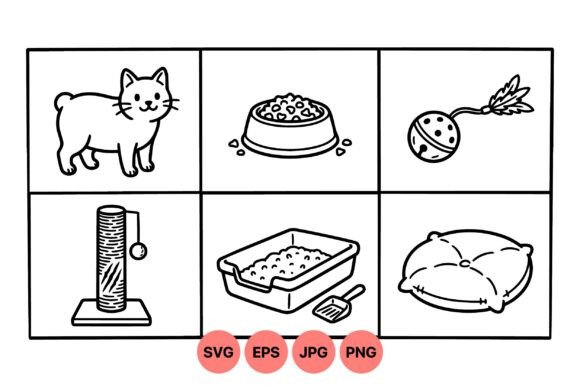
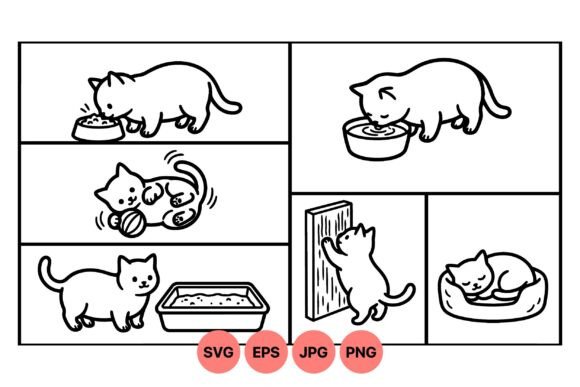
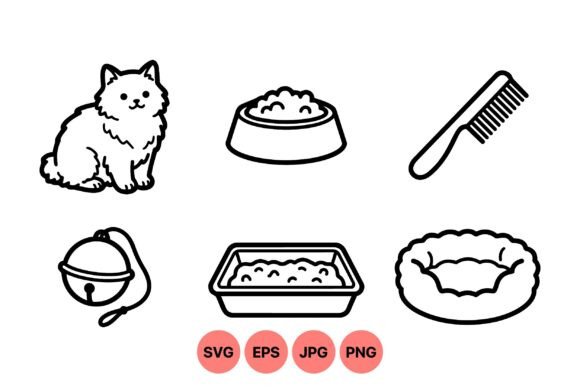
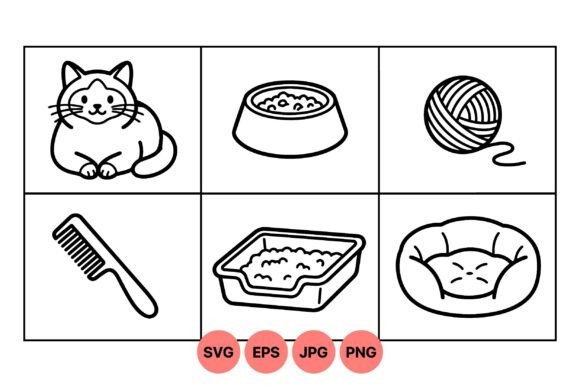
Opening the Cute Cat Essentials Clipart Set, I immediately felt that quiet confidence you get when a design lands right—not flashy, not fussy, but quietly intentional. The line art icons feature a relaxed cat lying down, surrounded by soft, essential pet items: food bowl, yarn ball, comb, litter box, and a plush pet bed. Everything is rendered in simple vector style with clear, unbroken outlines—no gradients, no shadows, no noise. It’s minimalist without feeling sterile. That relaxed posture? It reads as comforting, not lazy. That clean line weight? It signals embroidery-readiness before you even load it into your software.
A Real Project Test: Embroidering a Nursery-Themed Tote Bag
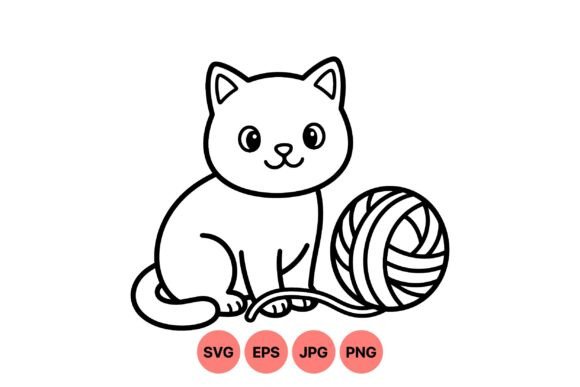
Last week, I prepped this set for a custom order: a cotton canvas tote bag for a new pet-loving parent—part baby gift, part cat-lover keepsake. I chose the yarn ball + sleeping cat combo, scaled to 3.5" wide, and stitched it on the front pocket using medium-weight cutaway stabilizer. The result? Crisp, legible, and undeniably warm. Customers don’t buy “line art”—they buy *feeling*. And this set delivers gentle charm without tipping into cutesy overload. The spacing between elements gives breathing room for stitch definition, and the consistent line thickness held up beautifully across both satin-stitched outlines and subtle fill-stitched accents (like the subtle curve of the pet bed).
Where It Shines—and Where It Needs Thought
This Cute Cat Essentials Clipart Set excels in projects where clarity, calm, and craft authenticity matter:
- Custom apparel: Works beautifully on sweatshirt cuffs, t-shirt hems, or apron pockets—especially when you want embroidery to feel like a quiet signature, not a shout.
- Baby and nursery items: The softness of the cat’s pose and rounded shapes read as soothing on onesies, burp cloths, and pillow covers—no sharp angles to snag or distract.
- Small shop merchandise: Perfect for boutique tea towels, enamel pin mockups, or embroidered patches sold alongside handmade pet toys. Its vector simplicity translates cleanly to print and stitch alike.
- Etsy listings and digital product previews: Because it’s line-based and uncluttered, it holds up well in printable mockups—even at thumbnail size on mobile.
But let’s be practical: not every surface welcomes this set equally. On stretchy fabric like ribbed knit caps or curved surfaces like baseball hats, those fine outlines need extra stabilization—test with light tear-away first. On dark fabric, avoid ultra-thin lines unless you’re pairing them with high-contrast thread (think white or pale mint on navy). And while the design avoids tiny lettering or dense fill areas, the comb’s teeth and yarn ball’s loops sit right at the edge of “safe for under 4” hoops”—so always check your smallest hoop clearance before digitizing.
Stitching It Right: Designer Notes You’ll Actually Use
As someone who’s stitched hundreds of client projects, here’s what I do before committing Cute Cat Essentials Clipart Set to a finished product:
- Test on scrap fabric first—same weight, same weave, same stabilizer as the final piece. Line art can ghost or blur if tension or stabilizer is off.
- Check thread color contrast in natural light. This set leans neutral, so it pairs effortlessly with heather grays, oatmeals, and soft teals—but verify that the cat’s outline doesn’t disappear against a busy fabric texture.
- Review stitch density. Since it’s vector line art, your digitizer (or software) will determine how much fill vs. running stitch is used. Avoid overloading small areas—e.g., keep the litter box base as a clean satin border, not a dense fill.
- Inspect corners and joins. Clean vector lines can become jagged when converted to embroidery if anchor points aren’t smoothed. Zoom in—especially around the cat’s ear and the yarn ball’s loop.
- Mock it in black and white. If it reads clearly without color, it’ll hold up across fabric types and lighting conditions.
- Confirm licensing. As an Illustrations download, this set is likely intended for commercial embroidery use—but always verify whether resale of finished embroidered goods (like tote bags or patches) is permitted before listing on Etsy or at craft fairs.
Why It Builds Trust—Not Just Cuteness
In my experience, customers respond not to “cute,” but to *coherence*. A well-executed Cute Cat Essentials Clipart Set on a handmade apron tells them: “This maker pays attention. They chose something that fits—not just the theme, but the texture, the scale, the story.” That matters for giftability. That matters for repeat buyers. It also supports brand consistency—if you sell pet-themed nursery goods, this set offers a visual throughline across embroidery, printables, and social media assets.
And yes, it elevates perceived value. A simple line-art cat on a linen tea towel feels considered—not generic. It says “handmade with intention,” not “designed for speed.” For craft business owners, that distinction is worth every extra minute spent testing thread contrast or stabilizer choice.
Final Thought: A Quiet Workhorse, Not a One-Off Trend
This isn’t a design that screams for attention. It’s the kind you reach for when you want warmth without whimsy, simplicity without emptiness, and professionalism without pretense. Whether you’re stitching a personalized gift for a friend’s new kitten, building a cohesive collection of Graphics for your digital shop, or refreshing your small shop’s holiday embroidery lineup—the Cute Cat Essentials Clipart Set earns its place not as decoration, but as a reliable, thoughtful tool. Just remember: even the calmest cat deserves careful prep before it goes under the needle.